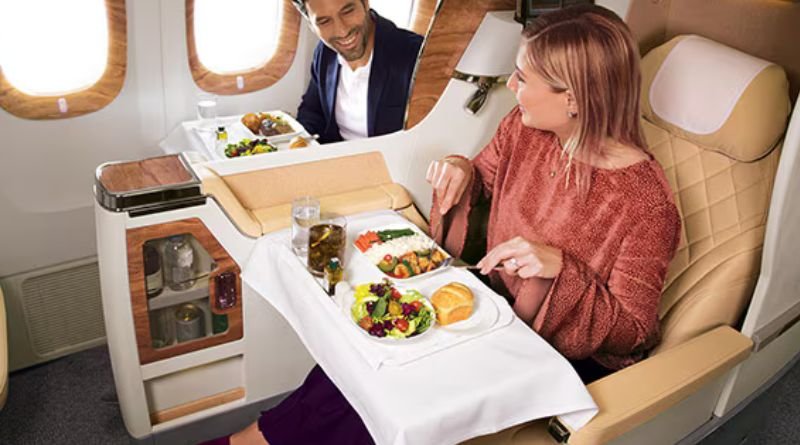
You’ve seen the ads — the shower spa, the onboard bar, the flat-bed suites gliding through the clouds. But is Emirates Business Class actually worth the price tag, or is the marketing doing most of the heavy lifting?
Here’s the honest answer: it depends heavily on which aircraft you end up on, and that’s the part most glossy reviews gloss over. This isn’t a single, consistent product — it’s two genuinely different experiences depending on whether you’re flying the A380 or the Boeing 777, and increasingly, whether your specific plane has been through Emirates’ ongoing cabin retrofit. This guide breaks down what to actually expect, seat by seat, so you know what you’re paying for before you book.
The A380 vs. the 777: Not the Same Business Class
This is the single most important thing to understand before booking. Emirates operates two very different Business Class cabins, and which one you get can make or break the experience.
On the A380, Business Class occupies much of the upper deck in a staggered 1-2-1 layout, meaning every single passenger gets direct aisle access — no climbing over a stranger at 2 a.m. Seats convert into genuinely flat beds, and the cabin includes the airline’s famous onboard lounge and bar near the rear of the upper deck, where passengers can stand, mingle, and grab a drink outside their seat.
On the Boeing 777, older configurations run 2-3-2, which means middle-seat passengers don’t get direct aisle access — a real drawback for a premium cabin. Emirates has been steadily retrofitting its 777 fleet with a newer 1-2-1 layout closer to the A380 standard, so aisle access is improving fleet-wide, but not every 777 has been upgraded yet.
The practical takeaway: if aisle access and the onboard bar matter to you, it’s worth checking your specific aircraft type before booking rather than assuming all “Emirates Business Class” tickets deliver the same experience. Routes from major US gateways to Dubai are more likely to use the A380, while many other routes still rely on the 777.
(Internal link opportunity: a guide on “how to check your Emirates aircraft type before booking” would fit naturally here.)
The Seat: Comfort, Storage, and What You Actually Get
Newer Emirates Business Class seats — now rolling out across both the A380 and 777 fleets as part of the airline’s multi-billion-dollar retrofit — are built on Safran’s leather seating platform, the same family used on Emirates’ A350s. These seats bring meaningful upgrades over older cabins: a personal minibar, adjustable lumbar support and footrest, wireless charging, customizable lighting, and USB-C charging ports alongside the standard AC outlet.
Older, non-retrofitted seats are still comfortable by any normal standard, but noticeably more basic — smaller entertainment screens, less storage, and in some 777 cabins, only angled-flat rather than fully flat recline. That distinction matters more than people expect on an overnight flight; angled-flat seats can leave you sliding slightly during sleep, which fully flat beds solve.
A detail worth flagging: seat width and bed length vary by exact position, not just aircraft type. Some of the best-positioned seats offer a noticeably longer bed than others on the same plane, so if you’re tall or particular about your setup, checking a seat map before selecting is genuinely useful rather than a nice-to-have.
Food and Drink: Where Emirates Tends to Deliver
Dining is consistently one of Emirates’ stronger cards. Multi-course meals are served with proper tableware, a real wine list, and a menu that leans into regionally inspired dishes rather than generic “airline continental.” On longer routes, Emirates allows passengers to pre-order their main course online up to 24 hours before departure, which is a small but genuinely useful feature if you have a specific dish in mind or dietary preferences to accommodate.
The A380’s onboard bar deserves its reputation. It’s a real social space — a horseshoe-shaped counter, bar stools, and a curated cocktail list — rather than a gimmick for photos. Whether that’s a highlight or a distraction depends on whether you’re trying to sleep through an overnight flight or looking for a reason to stay up.
One honest caveat: quality can vary by route and catering kitchen. A flight departing from Dubai tends to have the freshest, most consistent execution, since that’s Emirates’ home base and main catering hub. Meals loaded from outstation kitchens on the return leg are sometimes a slight step down — still solid, just not quite as sharp.
The Ground Experience: Lounges, Chauffeur Service, and Priority Handling
Business Class fare includes priority check-in, security, and boarding, along with access to Emirates’ lounges — and at Dubai International’s Terminal 3, that lounge is less “airport lounge” and more small private terminal, with multiple dining stations, quiet seating areas, and a scale that easily absorbs peak-hour crowds better than most competitors’ premium lounges.
Emirates also offers complimentary chauffeur-driven transfers in many cities, a detail that’s easy to overlook when comparing fares but genuinely changes the pre-flight experience — no taxi line, no rideshare surge pricing, just a scheduled pickup.
Where the ground experience is less impressive is at busier outstation airports, where Emirates relies on partner lounges rather than its own facility. These are perfectly serviceable but don’t match the Dubai flagship, so don’t assume every leg of a multi-city itinerary will feel equally premium.
Wi-Fi, Entertainment, and In-Flight Comfort
Emirates offers onboard Wi-Fi across its widebody fleet, with Business and First Class passengers typically receiving complimentary access for messaging and light browsing — enough to stay in touch, not enough to reliably stream video due to bandwidth limits at cruising altitude. Paid packages are available if you need more.
Entertainment screens on newer retrofitted cabins have grown significantly — larger, sharper displays with an extensive channel and film library that remains one of the more generous selections in the industry. Older cabins still offer a solid library, just on a noticeably smaller screen.
Noise-cancelling headphones are provided at every Business Class seat, and they do a reasonably good job isolating cabin noise, which matters more than people expect on a nine or ten-hour flight.
Is Emirates Business Class Worth the Price?
Prices for Emirates Business Class often start in the low thousands round-trip on major long-haul routes, though promotional fares and loyalty program redemptions can bring that down meaningfully. Whether that’s “worth it” really comes down to two things: which aircraft you’re booked on, and what you personally value most.
If direct aisle access, a fully flat bed, and the social bar experience matter to you, it’s worth the extra effort to confirm you’re booked on an A380 or a retrofitted 777 rather than an older configuration. If you’re booking based on price alone without checking aircraft type, you might end up paying a premium price for a cabin that doesn’t fully deliver the premium experience Emirates is known for.
(Internal link opportunity: a guide comparing Emirates Business Class to Qatar Airways or Etihad could link from this section.)
Frequently Asked Questions
Is Emirates Business Class better on the A380 or the 777? Generally, yes — the A380 offers direct aisle access for every seat, a fully flat bed, and the onboard lounge and bar, none of which older 777 configurations match. Newer retrofitted 777s are closing that gap, but it’s worth checking your specific aircraft before booking if this matters to you.
Does Emirates Business Class have Wi-Fi? Yes. Business Class passengers typically get complimentary Wi-Fi for messaging and light browsing on most widebody aircraft. Streaming isn’t usually included due to bandwidth limitations, though paid upgrades are available.
Can you lie fully flat in Emirates Business Class? On the A380 and newer 777 cabins, yes — seats recline into a genuinely flat bed. Some older, non-retrofitted 777 configurations only offer angled-flat recline, which isn’t quite the same for sleeping comfort.
Is the Emirates onboard bar available on every flight? No. The onboard lounge and bar are exclusive to the A380’s Business and First Class cabins and aren’t available on Boeing 777 flights.
How do I know which aircraft I’ll be flying on? Aircraft type is usually listed at booking and can be checked again closer to departure, though airlines can swap aircraft due to operational requirements. If seat configuration matters to you, it’s worth checking again shortly before your flight.
Final Thoughts
Emirates Business Class earns its reputation, but not uniformly across the fleet. The A380 experience — the bar, the fully flat bed, guaranteed aisle access — genuinely rivals first class on plenty of other airlines. The older 777 experience is still a comfortable, well-catered premium cabin, just a clear step below. Before you book, it’s worth the extra five minutes to check which aircraft you’ll actually be flying, because that single detail shapes almost everything else about the trip.